You spent weeks building your course. You recorded the videos, wrote the worksheets and finally hit publish.
And then? Crickets.
That's normal. Most courses don't fail because they're bad. They fail because the right people never hear about them.
So here are 25 simple ways to market an online course in 2026. You don't need all of them. Pick five that fit you, do them well, and add more as you grow.
Start With a Simple Plan
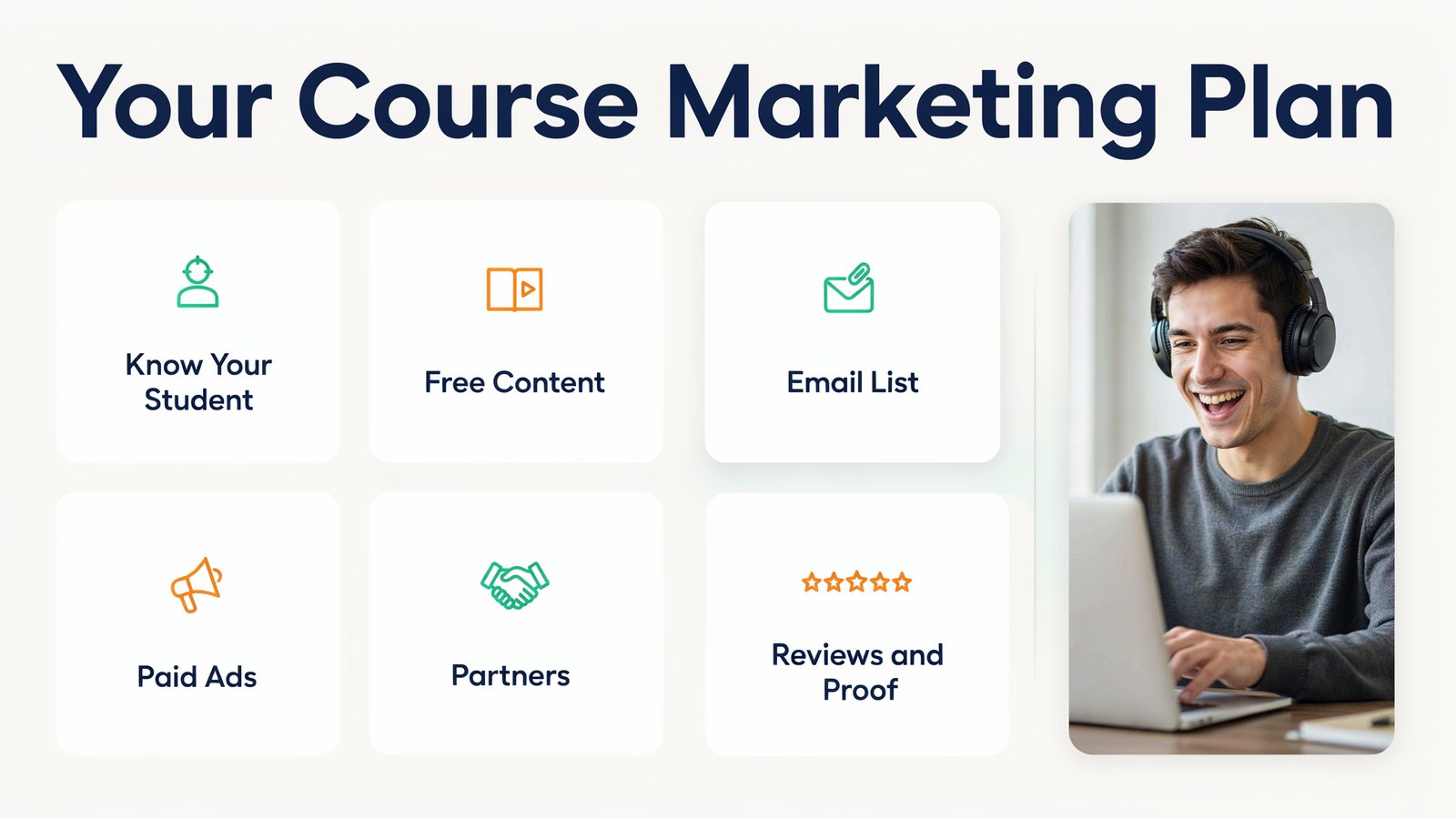
Course marketing has six parts. Get ready, share free content, build an email list, run some ads, find partners, and collect proof that your course works.
The 25 ways below follow that order. Start at the top.
Part 1. Get Your Course Ready to Sell
1. Know Exactly Who Your Course Is For
"Anyone who wants to learn photography" is not a target student. "New moms who want better photos of their kids with a phone" is.
The narrower your student, the easier your marketing gets. You know where they hang out, what they worry about and which words grab their attention.
Write a one-line description of your ideal student. Keep it next to your desk.
2. Promise One Clear Result
People don't buy courses. They buy results.
Turn your course into a simple promise. "Bake your first loaf of sourdough in 7 days." "Land your first freelance client in 30 days." If you can't say it in one sentence, your students won't either.
3. Build a Landing Page That Sells
Your sales page does the heavy lifting. Every ad, post and email sends people there, so it has to be good.
- A headline with your one clear promise
- A short video of you explaining who the course is for
- What students will be able to do after each module
- Reviews from real students, with names and photos
- A simple price, a money-back guarantee and one big button
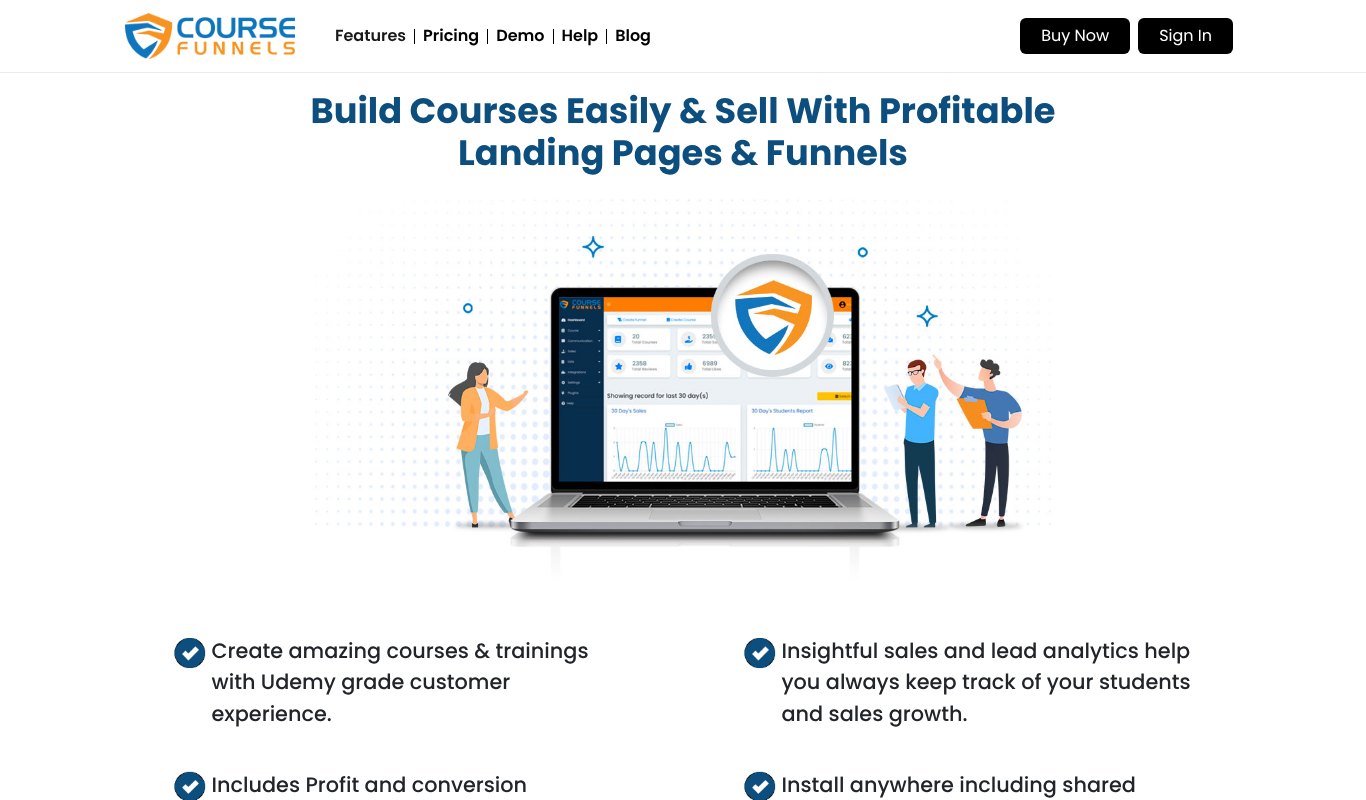
With CourseFunnels, the course, the sales page and the checkout live in one place. You build pages with a drag and drop editor, start from ready-made course sales templates, and A/B test two versions to see which one sells more.
4. Price It With Confidence
Cheap courses don't always sell more. A very low price can make people think the course isn't worth much.
Look at what similar courses charge. Then think about the value of the result. A course that helps someone get a raise is worth far more than $19.
You can also offer two or three tiers. A basic version, a full version, and a premium version with live calls or feedback.
Part 2. Get Free Traffic That Keeps Coming
5. Start a Blog in Your Niche
Every helpful article you write is a small door into your course. Someone searches a question, finds your answer, and starts to trust you.
Write about the problems your students have before they buy. Then link to your course where it fits naturally.
6. Use SEO So Google Sends You Students
Find the questions people type into Google about your topic. Free tools and even Google's own search suggestions show you what people want.
Use those exact words in your titles and headings. Answer the question clearly near the top. Keep your pages fast. CourseFunnels has SEO settings, caching and fast mobile pages built in, which helps your course pages show up too.
7. Post Helpful Videos on YouTube
YouTube is the second biggest search engine in the world, and video is how people like to learn.
Post short lessons that solve one small problem. Mention your course at the end and put the link in the description. A single good video can bring in students for years.
8. Share Short Clips on Social Media
Turn your lessons into 30 to 60 second clips for Instagram Reels, TikTok, YouTube Shorts and LinkedIn.
Pick one or two platforms where your students already spend time. Post regularly. Mix tips, behind-the-scenes moments and student wins, and only sometimes talk about the course itself.
9. Go on Podcasts
Podcast hosts always need good guests. And their listeners already trust them.
Find shows in your niche, listen to a few episodes, and pitch one specific topic you can teach. Offer listeners a free resource so they join your email list.
10. Answer Questions in Communities
Reddit, Quora, Facebook Groups and niche forums are full of people asking exactly what your course teaches.
Give real, generous answers. Don't spam links. When people see you know your stuff, they click your profile on their own.
11. Give Away a Free Mini Course
A free mini course is the best sample you can offer. It shows your teaching style and gives a quick win.
Make it short, three to five lessons. At the end, invite students into the full course with a special offer.
Part 3. Build Your Email List
12. Offer a Lead Magnet
Most people won't buy on their first visit. That's fine. Your job is to get their email so you can keep in touch.
Offer something small and useful in return. A checklist, a template, a short guide or a free video lesson.
13. Send a Welcome Email Series
When someone joins your list, send three to five emails over the next week or two. Introduce yourself, share your best tips, tell a student success story, then invite them to the course.
CourseFunnels has a built-in autoresponder, so you can set up this series once and let it run on autopilot. No separate email tool needed.
14. Host a Free Live Webinar
A webinar lets people meet you, ask questions and see you teach. It's one of the best ways to sell a course.
Teach something truly useful for 30 to 45 minutes. Answer questions. Then share an offer that's only open for a few days.
15. Run a Short Challenge
A 5-day challenge gives people a small task each day. It builds excitement, creates quick wins and gets people talking.
On the last day, open the doors to your full course.
Part 4. Use Paid Ads the Smart Way
16. Facebook and Instagram Ads
Meta ads let you reach people by interest, age and location. Start by promoting your free lead magnet, not the course itself. It's cheaper and builds your list.
Start small, maybe $10 to $20 a day. Test a few images and headlines, keep the winners and turn off the rest.
17. Google and YouTube Ads
Google ads reach people who are actively searching for a solution. That's powerful when your course solves a clear problem.
Target specific phrases like "learn Excel for accounting" instead of broad words like "Excel."
18. LinkedIn Ads for Professional Courses
If your course helps people at work, LinkedIn lets you target by job title, industry and company size. It costs more per click, but each click is worth more too.
19. Retargeting Ads
Most visitors leave your sales page without buying. Retargeting shows them a gentle reminder later, on Facebook, Instagram or Google.
Add the Facebook Pixel and Google tags to your course pages. CourseFunnels connects to both, so you can retarget visitors who looked but didn't buy.
Part 5. Grow With Partners
20. Start an Affiliate Program
Let others sell your course for a share of each sale. Bloggers, YouTubers and past students can all become affiliates.
Give them ready-made emails, images and a fair commission. CourseFunnels includes affiliate management, so you can track who sent each sale.
21. Team Up With Other Creators
Find creators who serve the same students but don't compete with you. A yoga teacher and a healthy cooking coach, for example.
Swap guest lessons, run a joint webinar or bundle your courses together.
22. Speak at Virtual Summits
Online summits bring many experts together for a few days. Each speaker promotes the event, so you reach a big new audience in one go.
Part 6. Build Trust and Make the Sale
23. Collect Reviews and Success Stories
Nothing sells a course like a happy student. Ask for a review when someone finishes a module or gets a result.
Short video reviews work best. Put them on your sales page, in your emails and in your ads.
24. Build Your Personal Brand
People buy from people they know and like. Show your face. Share your story, your mistakes and your wins.
You don't need to be famous. You just need to be known by the right few thousand people.
25. Use Limited-Time Offers
Deadlines get people off the fence. Open enrollment for one week, offer a launch discount, or add a bonus for the first 50 students.
Only use real deadlines, though. Fake countdown timers hurt trust fast.
Which Ways Should You Start With?
If you're just starting, keep it simple.
| If You Have | Start With |
|---|---|
| No audience yet | A clear promise, a good landing page, a free lead magnet and one social platform |
| A small email list | A welcome series, a free webinar and student reviews |
| Some budget | Lead magnet ads plus retargeting |
| A proven course | An affiliate program, partners and summits |
Do a few things well before you add more. Five steady channels beat twenty half-done ones.
Mistakes That Slow Down Course Sales
A few common mistakes can quietly kill a good course. Watch out for these.
- Selling before helping. If every post is a sales pitch, people tune out. Give value first.
- Talking about features, not results. Nobody wants 40 videos. They want the result those videos bring.
- No follow up. Most buyers need several reminders before they act. Email makes that easy.
- Trying every channel at once. Spread too thin and nothing works well. Go deep on a few.
- Ignoring the numbers. Track where students come from so you know what to do more of.
Fix these and even a small audience can turn into steady sales.
Keep Your Tools Simple
Many course creators end up paying for five tools. One for the course, one for landing pages, one for email, one for affiliates and one for analytics. The bills add up fast.
CourseFunnels puts all of that in one place. A course builder with videos, quizzes, assignments and certificates. A drag and drop page builder. A built-in autoresponder. A/B testing, affiliate management, and an interface in 17 languages.
It installs on your own hosting, so there are no per-student limits and no share of your sales. Plans start at $5.58 a month, paid yearly.
Platforms like Thinkific, Teachable and Kajabi cost $29 to $143 a month or more. That's money you could put into ads instead.
Final Thoughts
Marketing an online course isn't about tricks. It's about showing the right people, again and again, that you can help them.
Pick five ways from this list. Do them every week for three months. Then look at what's working and do more of it.
Your future students are out there. Go say hello.
FAQs About Marketing an Online Course
What is the first thing I should do to market my course?
Get clear on who the course is for and the one result it gives them. Every other step gets easier once you know that.
How can I market an online course for free?
Write helpful blog posts, post short videos on YouTube and social media, answer questions in communities, go on podcasts and give away a free mini course to build your email list.
How much should I spend on course ads?
Start small, around $10 to $20 a day, and promote a free lead magnet first. Raise the budget only on ads that bring in students at a profit.
How long does it take to get students?
Paid ads can bring visitors the same day. Free channels like SEO and YouTube usually take three to six months to build steady traffic, but they keep working for years.
Do I need a big audience to sell a course?
No. Many creators make their first sales to a list of a few hundred people. A small, focused audience that trusts you beats a big one that doesn't care.
Should I sell my course on a marketplace or my own site?
Marketplaces help people find you, but they control your price and keep a big share. Your own site lets you keep the profit and the student list. Many creators use both.